27 Indoor Games for Kids That Make Staying Home Fun
When the weather keeps the kids inside, finding ways to keep them busy can be a challenge. I like the idea of choosing indoor games that give children something fun to do without requiring expensive toys or complicated setups. From quick movement games and creative art projects to family challenges and classic card games, there are plenty of ways to turn an ordinary afternoon at home into something special.
In this guide, I’m sharing 27 indoor games for kids that work for different ages, group sizes, and interests. Some need only household items, while others are perfect for family game nights or rainy-day activities. I’ve included simple instructions and practical ideas to help you choose activities that keep children entertained, encourage creativity, and make family time more enjoyable.
Key Takeaways
- Easy to set up: Many of these games use everyday items such as paper, pillows, plastic bottles, and playing cards.
- Fun for different ages: Choose simple activities for younger children and add challenges for older kids.
- Active indoor play: Games like Freeze Dance, Hopscotch, and Indoor Hockey help children move when outdoor play is not possible.
- Creative activities: Play Dough Art, Paint Your Dreams, and Start a Band give kids opportunities to express themselves.
- Family-friendly entertainment: Treasure hunts, bingo, and guessing games can bring everyone together without spending much money.
1. Hunt Against The Timer
I recommend Hunt Against The Timer when children need a quick activity that gets them moving and paying attention. One person chooses a color and sets a time limit, while everyone else searches the room for objects that match. Players must bring their finds back before the timer runs out.
To make the game more interesting, try a new color in every round or choose a letter instead. You can award one point for each correct item and give bonus points for unusual finds. I would set clear boundaries and remind children to collect only safe, movable objects rather than climbing or reaching into difficult places.
2. Grandma’s Footsteps
Grandma’s Footsteps is a simple game that encourages children to move carefully and pay attention. One player acts as Grandma and stands with their back turned while everyone else starts a short distance away. The goal is to approach Grandma quietly and reach the designated wall or finish line without being caught moving.
Grandma can turn around whenever they like, and anyone seen moving must return to the starting point or sit out for that round. I like this game because it needs no equipment and works well in a hallway or open room. For younger children, let them try again instead of eliminating players so everyone gets a chance to participate.
3. Egg Jousting
Egg Jousting is a traditional game that can be a fun addition to an Easter gathering or family celebration. Each player starts with a hard-boiled egg and gently taps it against an opponent’s egg. When one end cracks, players can try the other end, following the agreed rules.
The player whose egg remains intact wins the round, and the game continues until a winner is decided. I recommend using cooled, fully cooked eggs and keeping the tapping gentle to prevent broken shells from scattering. Once the game is over, refrigerate the eggs promptly if you plan to eat them, and discard any that have been left out too long.
4. Zingo
Zingo is a matching game that brings the excitement of bingo to the table. Each player takes a Zingo card, and the person operating the tile dispenser reveals matching pictures or words. Players cover the corresponding spaces on their cards, and the first person to complete the required pattern wins.
I would choose this game for children who enjoy quick rounds and visual challenges. Younger players can focus on matching pictures, while older children can practise reading the words on the tiles. If you do not own the game, you can make a homemade version with picture cards and matching boards, using large pieces that are easy to handle.
5. What’s The Time, Mr. Wolf?
What’s The Time, Mr. Wolf? is a lively game that combines listening, counting, and movement. One player stands at one end of the room as Mr. Wolf, facing away from the others. The remaining players ask, “What’s the time, Mr. Wolf?” and move forward according to the number Mr. Wolf announces.
When Mr. Wolf calls “Dinner time,” everyone turns and runs back to the starting line while the wolf tries to catch someone. The player caught can become the next wolf. I recommend clearing furniture and slippery objects from the playing area first, especially when children are excited and moving quickly.
6. Go Fish
Go Fish is a classic card game that helps children practise matching, taking turns, and remembering which cards other players might have. Deal each player a hand of cards, placing the remaining deck in the middle. Players ask another person for a rank they already hold, hoping to collect matching cards.
If the other player has the requested card, they hand it over. Otherwise, the asking player draws from the deck according to the game’s rules. Players place completed sets aside, and the person with the most sets when the game ends wins. I suggest using a smaller deck or fewer cards for younger children to make the first few rounds easier to follow.
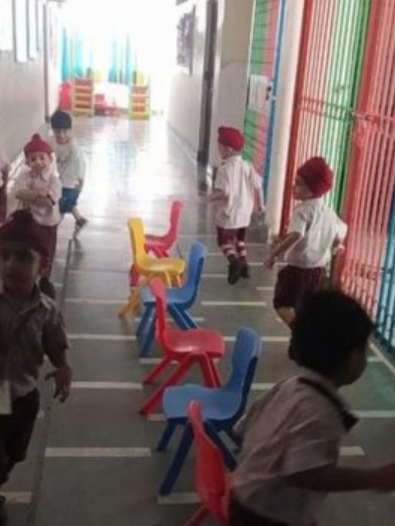
7. Musical Chairs
Musical Chairs is a great choice when a group of children needs an activity with plenty of movement. Arrange chairs in a circle, using one fewer chair than the number of players. Start the music and let everyone walk around the chairs until the music stops.
Each player must find a seat, and the person left standing leaves the round. Remove one chair before starting the next round, continuing until one player remains. I would keep the rules simple and remind everyone to walk rather than push or dive for a seat. For a more inclusive version, let the child without a chair choose the next song or become the music leader instead of being eliminated.
8. Freeze Dance
Freeze Dance is one of the easiest indoor activities to organize because all you need is music and enough space to move. Play a favorite song and let the children dance however they like. Whenever the music stops, everyone must freeze in place until it starts again.
Anyone who moves can sit out for one round, perform a funny dance, or help control the music. I prefer the second approach for younger kids because it keeps everyone involved. You can also call out different movements, such as dancing like a robot or hopping like a frog, to give each round a new challenge.
9. Hopscotch
Indoor Hopscotch brings a familiar playground activity inside when outdoor play is not an option. Use painter’s tape to mark numbered squares on a clear floor, then have children move through the grid according to the rules you choose. They can hop on one foot, switch feet where needed, and practise staying within the lines.
I recommend placing the grid on a flat, nonslip surface and removing loose rugs before play begins. Younger children can start with a shorter grid, while older kids can add a beanbag toss or a timed round. This activity offers a simple way to practise balance, coordination, counting, and taking turns.
10. Play Pretend
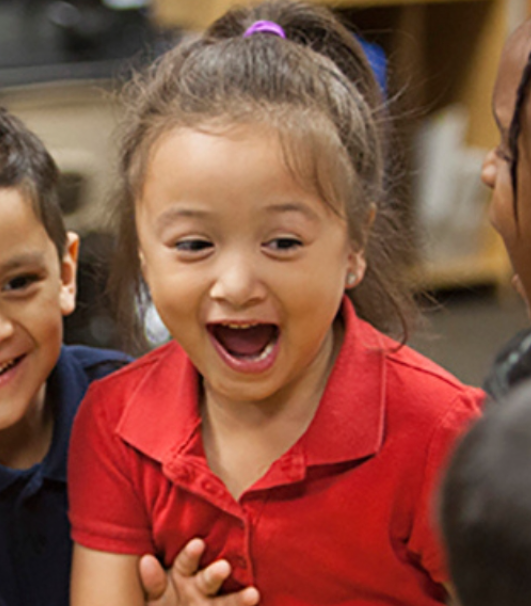
Play Pretend gives children a chance to invent characters, tell stories, and act out situations using their imagination. I would start by suggesting a theme, such as a grocery store, a space mission, a restaurant, or a visit to the zoo. Children can choose their roles and use safe household objects as props.
For a group activity, one child can act out a character or situation while the others guess what it is. You can also let children create a short story together, with each person adding one new idea. There is no need for costumes or special supplies; the main goal is to give children room to explore their ideas and have fun.
11. DIY Obstacle Course
A DIY Obstacle Course turns an ordinary room into a series of small challenges. Use cushions, cardboard boxes, floor markers, and other safe household items to create a path where children can step over, crawl under, or walk around obstacles. You can include a simple “Floor Is Lava” section where players move between designated safe spots.
I suggest starting with a short course and adding more challenges only when children understand the route. Avoid unstable furniture, slippery surfaces, sharp corners, and obstacles that require risky climbing. Younger kids can follow a simple path, while older children can try remembering the order of the challenges or completing the course without skipping a station.
12. Race Paper Planes
Race Paper Planes combines a craft activity with a friendly flying competition. Give each child a sheet of paper and let them fold a plane, decorate it, and choose a name for their design. Mark a starting line and have everyone launch their planes from the same spot.
To decide the winner, measure how far each plane travels and record the results over several rounds. I like adding a second challenge in which children try to land their planes inside a marked target area. They can change the folds, wing shape, or launch angle and compare the results, making this a playful introduction to experimenting and problem-solving.
13. Hot Potato
Hot Potato is a quick group game that works well at birthday parties, family gatherings, or on an ordinary afternoon at home. Have everyone sit in a circle and pass a soft ball or another safe object while music plays. When the music stops, the person holding the object completes a small challenge or sits out for that round.
I recommend using a soft object that children can pass easily without throwing it across the room. For younger players, keep the music rounds short and allow everyone to stay in the game until the final round. You can make the activity even sillier by asking the person holding the potato to tell a joke, name an animal, or perform a funny pose.
14. Play Dough Art
Play Dough Art is a simple creative activity that lets children make their own figures, patterns, and little scenes. Set out a few colors of play dough and invite them to create animals, food, flowers, buildings, or anything else they can imagine. Cookie cutters and child-safe shaping tools can provide extra options.
I would give children a theme if they need help getting started, such as making a miniature garden or designing a fantasy creature. They can also describe their creations and invent stories about them. Choose age-appropriate materials, supervise younger children closely, and keep play dough away from mouths, particularly when small parts or tools are involved.
15. Guess Who
Guess Who is a guessing game built around asking questions and narrowing down possible answers. In the traditional version, each player chooses a mystery character, and the other person asks yes-or-no questions about appearance or other visible details. Players use the answers to eliminate characters until they can identify the correct one.
I like the idea of making a homemade version with family photographs, cartoon characters, or drawings. Just make sure everyone agrees to use the pictures, especially when sharing them beyond the household. Encourage children to ask useful questions rather than random ones, helping them practise logical thinking, observation, and clear communication while they play.
16. Paint Your Dreams
Paint Your Dreams gives children a creative way to express their ideas through colors and pictures. Set out paper or small canvases, washable paints, brushes, and a cup of water. Invite each child to paint something they hope to do, a place they would love to visit, or an imaginary world they would like to explore.
I would avoid judging the artwork or comparing one child’s painting with another’s. Instead, ask each child to explain what they created and what makes it meaningful to them. Displaying the finished paintings at home can help children feel proud of their work and give the family something interesting to talk about.
17. Ping Pong
Ping Pong can be a fun indoor sport for children who enjoy friendly competition and quick reactions. If you have a table tennis table, players can practise hitting the ball back and forth, serving, and keeping a rally going. Singles games work well for two players, while doubles allow four people to take part.
If a full-size table is not available, a suitable tabletop and a lightweight net can provide a simpler alternative, provided the setup is stable and safe. I recommend using soft or lightweight practice balls for beginners and keeping breakable items away from the playing area. Start with short rallies rather than focusing only on winning points.
18. Memory Games
Memory Games are easy to adapt to different ages and can be played with cards, household objects, or homemade picture pairs. For a matching-card version, place the cards face down and let each player turn over two at a time. If the pictures match, the player keeps the pair; if not, both cards are turned face down again.
I suggest starting with six to eight pairs for younger children and increasing the number as they become more comfortable with the game. You can also place a few objects on a tray, let everyone look at them, and then hide one to see who remembers what is missing. These activities encourage attention to detail, recall, and patient turn-taking.
19. Indoor Hockey
Indoor Hockey offers a way to bring a simple team sport into a suitable indoor space. Use rolled-up socks as pucks and lightweight foam sticks or soft alternatives instead of hard hockey sticks. Place small goals at opposite ends of the playing area and divide the children into teams.
I recommend playing on a clear, level floor away from windows, furniture, and fragile objects. Set a rule that players keep their sticks low and never swing them toward another person. For a smaller room, replace team play with a target challenge in which children gently slide the sock puck into a goal from a marked line.
20. Hula Hoop
Hula Hoop challenges are a fun way to get children moving indoors or in a clear outdoor space. Each player tries to keep a hoop spinning around their waist for as long as possible. Once they get comfortable, they can try different challenges, such as stepping through a hoop, rolling it toward a target, or seeing how many controlled spins they can manage.
I would begin with a hoop that fits the child’s size and allow plenty of room around each player. There is no need to turn every round into a competition; children can also practise at their own pace and celebrate improvements. Make sure the floor is clear so nobody trips while moving around.
21. Start A Band
Starting a band at home gives children a chance to make music together without needing a collection of instruments. Use toy instruments if you have them, or create simple sound makers from safe household materials. Empty containers can become drums, while sealed shakers filled by an adult can provide a gentle rhythm.
I recommend asking each child to choose a role, such as singer, drummer, or conductor. They can agree on a song, invent a short tune, or perform a family concert at the end. Keep the volume comfortable and avoid glass objects, sharp materials, or small loose items that younger children might swallow.
22. Make Bottle Hurricanes
Bottle Hurricanes are sensory bottles that let children watch water and small decorative pieces swirl when the container is moved. An adult can fill a sturdy, clear plastic bottle with water and a little glitter or food coloring, leaving enough space for the contents to move. Close the lid securely and check for leaks before giving it to a child.
For a fun experiment, ask children to predict what will happen when the bottle is shaken, spun, or left to settle. They can compare how quickly the glitter moves through water and discuss what they observe. I recommend avoiding tiny decorations for young children and using an adult-secured lid so the bottle cannot easily open or spill.
23. Ring Toss
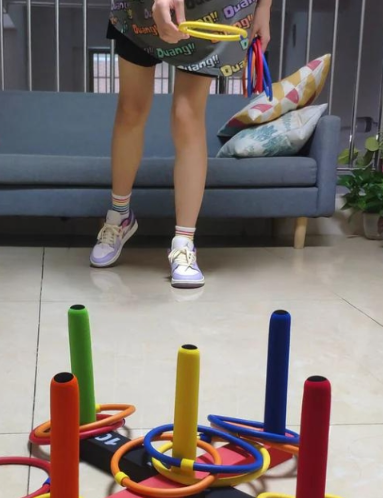
Ring Toss is a simple aiming game that can be made with materials already at home. Use lightweight rings or make large rings from suitable craft materials, then place a sturdy bottle or cone on the floor as the target. Players take turns tossing the rings from a marked line and counting how many land around the target.
I like this activity because the difficulty is easy to change. Move the throwing line closer for younger children or farther away for older players, and assign different points to targets placed at different distances. Use unbreakable targets and keep the throwing area clear so nobody walks in front of a player who is taking a turn.
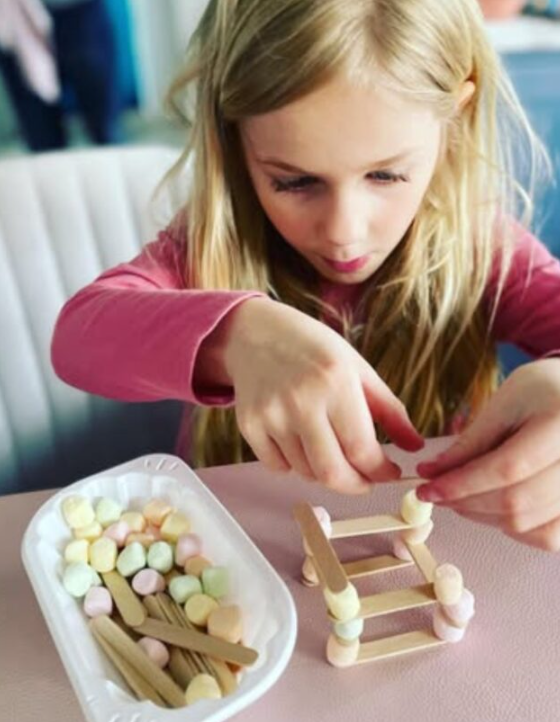
24. Marshmallow Tinkertoys
Marshmallow Tinkertoys is a hands-on building activity that lets children turn simple materials into small structures. Give them marshmallows and pretzel sticks, then challenge them to build a house, bridge, tower, or imaginative shape. They can experiment with different connections and see which designs stand upright.
I recommend starting with a small structure before moving on to more complicated designs. Ask children what might make a tower stronger or how they could build a wider base. This can encourage creative thinking and basic problem-solving without making the activity feel like a lesson. Because marshmallows and pretzels can be choking hazards, this game is best for children old enough to handle them safely under appropriate supervision.
25. Family-Photo Bingo
Family-Photo Bingo is a personal twist on traditional bingo that helps children connect names with familiar faces. Create a grid using photographs of relatives, and give each player a matching board and markers. Call out a family member’s name, and players cover the corresponding picture if it appears on their board.
The first person to complete a row can call out “Bingo!” You can make the game easier by using fewer photographs or more challenging by adding extended family members. I would use photos that family members are comfortable sharing and make sure the pictures are large enough for children to recognize easily.
26. Stop the Bus
Stop the Bus is a word game that encourages children to think quickly and come up with words that fit different categories. Each player draws columns on a sheet of paper, using headings such as girl’s name, boy’s name, animal, food, and place. Choose a letter, then give everyone a set amount of time to write an answer for each category beginning with that letter.
When time is up, compare the answers and award points according to rules agreed upon before the round. You can give extra credit for valid answers that nobody else has written. For younger children, use familiar categories and allow more time; older players can add categories such as books, sports, or things found at home.
27. Indoor Treasure Hunt
An Indoor Treasure Hunt turns the house into a place for discovery. Hide safe objects in suitable locations and give children clues or a checklist of things to find. You could ask them to locate a red toy, a soft object, a book with an animal on the cover, or a specific household item.
I recommend choosing hiding places that do not require climbing, opening unsafe cupboards, or moving heavy furniture. For older children, write simple riddles that lead from one clue to the next. You can also set a gentle time limit or work in teams, but the main goal is to make the search enjoyable rather than stressful.
Final Thoughts
Keeping children entertained at home does not have to mean buying new toys or planning a complicated schedule. With these 27 indoor games for kids, I can find options for active play, quiet afternoons, creative projects, and family gatherings using materials that are often already available. The best choice depends on the children’s ages, interests, available space, and energy levels.
I recommend keeping a few favorite activities ready for rainy days, school breaks, and times when everyone needs something different to do. Let children help choose the game or suggest their own rules, and don’t worry if an activity changes along the way. A little flexibility can turn simple playtime into a chance to create memories together.