60 Minute to Win It Games for Parties, Teens, School, and Work
I love party games that bring people together without requiring a lot of planning or expensive supplies. Minute to Win It games are perfect for these occasions because most challenges use everyday items, simple rules, and a timer set to 60 seconds. I can use them for birthday parties, family gatherings, school celebrations, teen parties, and even office events.
In this collection, I’ve gathered games for different ages, group sizes, and settings. Some challenges involve stacking, tossing, or balancing objects, while others test memory, quick thinking, and teamwork. I’ve also included games that need little or no equipment, so I can choose an activity based on the time and materials available. With a few simple rules and a little friendly competition, these games can turn an ordinary gathering into a memorable event.
Key Takeaways
- For general parties: Pile of Kisses, Wall Bounce, and Elephant March are easy to set up and fun to watch.
- For teens: Cookie Face, Paper Plane Flight, and Cereal Scramble offer a mix of silly and skill-based challenges.
- For school: Stack Attack, Defy Gravity, and Nose Dive can add variety to classroom celebrations and activity days.
- For groups: Water Pong, Wrap It Up, and Balloon Waddle encourage participation and friendly competition.
- For work: Emoji Pictionary, Name Dropping, and Convince the Sharks make good choices for team-building sessions.
- Without supplies: Stare Down, Backward ABCs, and How Many Words? are easy to start almost anywhere.
10 Minute to Win It Games
1. Pile of Kisses
I set out a pile of individually wrapped chocolate kisses for each player. When the timer starts, everyone has one minute to unwrap as many chocolates as possible using only one hand.
Once the minute ends, I count the unwrapped chocolates. The player with the highest number wins. I like this game because the rules are simple, but opening small wrappers quickly can be harder than expected.
My tip: I give everyone the same number and type of chocolates and let players keep their unwrapped treats if they want. I check for food allergies before the game begins.
2. Lego Builders
For this challenge, I give each player an identical set of building bricks and a picture of a simple structure. Everyone has 60 seconds to recreate the example as accurately as possible.
I might choose a small house, a tower, or another easy design. The first player to finish correctly wins, or I compare the completed models when time runs out.
My tip: I prepare the building sets beforehand and use a design that can reasonably be completed in one minute. This keeps the game moving and prevents arguments over missing pieces.
3. That’s a Wrap!
I provide each participant with a small box, wrapping paper, and tape. Their task is to wrap the box before the one-minute timer ends.
When time is up, I judge the results based on coverage, neatness, and whether the paper stays in place. This is a fun choice for holiday parties, gift exchanges, and family gatherings.
My tip: I cut the wrapping paper to the same size for everyone and provide equal amounts of tape. That way, the winner is decided by wrapping skills rather than preparation.
4. Wall Bounce
I place a bowl a few feet from a wall and give each player several ping-pong balls. Players bounce the balls off the wall, aiming to land them inside the bowl.
Everyone has one minute to score as many successful shots as possible. I count the balls that remain in each bowl at the end, and the highest score wins.
My tip: I mark a throwing line and keep every bowl the same distance from the wall. A clear play area also makes it easier to collect stray balls.
5. Blindfolded Bowling
I arrange lightweight plastic bottles or bowling pins in a clear space and provide a soft ball. Each player wears a blindfold and tries to knock down as many pins as possible while a teammate gives verbal directions.
The player has one minute to complete the challenge. I count the pins knocked down and declare the highest-scoring player the winner.
My tip: I remove furniture and other obstacles from the playing area. Players should roll the ball rather than throw it, and younger children should have adult supervision.
6. Runny Nose
I give each player a tissue box filled with tissues. The challenge is to remove as many tissues as possible using only one hand before the timer reaches 60 seconds.
Players must pull the tissues out rather than shake the box or tip it over. I count the tissues removed at the end to find the winner.
My tip: I use identical tissue boxes with the same number of tissues in each one. This keeps the game fair and makes cleanup easier.
7. Elephant March
I place a lightweight plastic ball inside the leg of a pair of pantyhose and secure the waistband around the player’s head. I then arrange several empty plastic bottles on the floor.
Players swing their heads from side to side to move the ball and knock over the bottles without using their hands. The person who knocks down the most bottles within one minute wins.
My tip: I use lightweight bottles and a soft ball, leave plenty of space around each player, and make sure the headgear fits comfortably.
8. Penny Tower
I give each player a pile of pennies or larger stacking tokens. Using only one hand, they must build the tallest tower possible within one minute.
The tower must remain standing when time runs out. If it falls, the player can rebuild it while time remains.
My tip: I use a flat surface and identical coins or tokens. For younger children, larger stacking pieces are easier to handle and reduce the risk of choking.
9. Keep It Up
I give each player a lightweight feather and ask them to keep it floating in the air using only their breath. Once the timer starts, they blow gently to stop the feather from touching the floor.
The player who keeps the feather airborne for the full minute wins. If nobody manages it, I award the win to whoever keeps it up the longest.
My tip: I choose a room without strong drafts or fans because moving air can make the challenge unfair.
10. Tissue Toss
I provide each player with a tissue box and ask them to pull out one tissue at a time using only one hand. The goal is to empty the box as quickly as possible within 60 seconds.
If someone empties their box first, they win. If nobody finishes, I count the tissues removed to determine the highest score.
My tip: To make this game different from Runny Nose, I ask players to place each tissue in a separate pile after removing it. This adds another small task and makes the challenge more interesting.
10 Minute to Win It Games for Teens
1. Ping Pong Bounce
I arrange plastic cups in a straight line or pyramid on a table and give each player a supply of ping-pong balls. Players stand behind a marked line and bounce the balls toward the cups.
They have one minute to land as many balls as possible inside the cups. I count one point for every ball that stays in a cup, and the highest score wins.
My tip: I use identical cups, balls, and throwing distances for every player. I also keep spare balls nearby so the game does not stop whenever someone misses.
2. Paper Plane Flight
I give each teen a sheet of paper and mark a target area on the floor. Players have one minute to fold a paper airplane and throw it toward the target.
I award points based on where each plane lands. For example, a plane landing inside the target earns more points than one landing outside it.
My tip: I provide identical sheets of paper and use the same throwing line for everyone. I clear the landing area before each round to prevent players from stepping on other planes.
3. Cookie Face
I ask each player to place a cookie on their forehead. Once the timer starts, they must move it down their face and into their mouth using only facial movements.
Hands are not allowed. If the cookie falls, the player can put it back on their forehead and try again while time remains.
My tip: I choose cookies that are easy to handle and check for food allergies before the game. Each player gets their own cookie, and no one needs to share food.
4. Stack It Up
I give each player a pile of identical sandwich cookies and a flat surface. Their task is to build the tallest cookie tower they can within one minute.
The tower must remain upright when the timer ends. If it falls, players can rebuild it before time runs out.
My tip: I use cookies of the same size and count only towers that remain standing. I also keep the playing surface away from fans or other sources of movement.
5. M&M Straw Race
I place a plate of small candies beside an empty plate for each player. Using a straw, participants pick up the candies through suction and transfer them one at a time.
Everyone has 60 seconds to move as many candies as possible. I count the pieces on the receiving plate to determine the winner.
My tip: I provide a new straw for every participant and check for allergies. For a non-food version, I replace the candies with lightweight paper circles.
6. Balloon Pop
I give each player a set of inflated balloons and mark a clear area for the challenge. When I say go, players try to pop their balloons by sitting on them.
The player who pops the most balloons within one minute wins. I keep the energy high by counting down the final few seconds.
My tip: I supervise the activity, keep the floor clear, and collect broken balloon pieces immediately. I offer a balloon-free alternative for anyone with a latex allergy.
7. Cereal Scramble
I cut the front panel of an empty cereal box into several puzzle pieces before the game. Each player receives an identical set and must reconstruct the original picture.
Players have one minute to fit the pieces together. The first person to complete the picture correctly wins, or I award points for correctly placed pieces when time runs out.
My tip: I prepare all the puzzles in advance and cut each box into the same number of pieces. Larger pieces make the challenge easier, while smaller pieces increase the difficulty.
8. Junk in the Trunk
I attach an empty tissue box to a belt around each player’s waist and fill it with ping-pong balls. The opening should face outward so the balls can escape as the player moves.
When the timer starts, players shake, jump, and wiggle to release the balls without using their hands. The first person to empty the box wins, or I count the balls released during the minute.
My tip: I secure the box comfortably and leave enough space between players to prevent collisions. Lightweight balls work best for this challenge.
9. Egg Roll
I mark a starting line and finish line on a smooth surface. Each player gets an egg or reusable practice egg and must guide it across the floor using only their nose.
Players have one minute to reach the finish line without touching the egg with their hands. The first person to finish successfully wins.
My tip: I prefer reusable practice eggs indoors because they reduce mess and food waste. If I use raw eggs outdoors, I clean the surface thoroughly afterward.
10. Penny Stack
I give each player 25 pennies or identical stacking tokens. Using only one hand, they must build a single stable stack before the one-minute timer ends.
I check the stacks when time runs out and award the win to the player with the tallest tower that remains standing.
My tip: I use identical coins or tokens for everyone. For younger players, I choose larger pieces that are easier to handle.
10 Minute to Win It Games for School
1. Stack Attack
I provide each student with 36 plastic cups. When the timer starts, the student builds a pyramid and then returns the cups to a single stack before the minute ends.
I can award the win to the first student who completes both steps correctly. If nobody finishes, I compare how much of the task each student completed.
My tip: I demonstrate the stacking pattern first and use identical cups for everyone. This game works well for classroom celebrations, school fairs, and activity days.
2. Defy Gravity
I give each student three inflated balloons. The challenge is to keep all three in the air using only one hand.
Players must tap the balloons upward and move quickly to stop any from touching the floor. The winner is the student who keeps all three airborne for the longest time, up to one minute.
My tip: I start younger students with one balloon and increase the number as they become comfortable. I also make sure the playing area is clear.
3. Suck It Up
I set out two plates for each student, placing small candies on one and leaving the other empty. Students use a straw to pick up the candies through suction and transfer them without using their hands.
They have one minute to move as many pieces as possible. I count the candies on the second plate to find the winner.
My tip: I check school food policies and allergies before using candy. Lightweight paper circles make a useful alternative when food is not suitable.
4. Junk in the Trunk
I attach a tissue box filled with ping-pong balls around each student’s waist. When the game begins, players shake their bodies to release the balls without using their hands.
Each student has 60 seconds to empty the box or release as many balls as possible. I count the remaining balls to determine the winner.
My tip: I use lightweight balls, check that the box fits comfortably, and provide enough room for students to move safely.
5. Penny Hose
I place a coin or stacking token inside the toe of each leg of a clean pair of pantyhose. Students must retrieve the tokens by moving them through the fabric toward the openings.
The goal is to remove both tokens within one minute. If nobody succeeds, I compare how far each student has progressed.
My tip: I use intact fabric and larger tokens for easier handling. For younger students, I replace the pantyhose with a simple fabric pouch.
6. Nose Dive
I place cotton balls in one bowl and an empty bowl nearby. Students apply a small amount of petroleum jelly to the tip of their nose, pick up cotton balls, and transfer them without using their hands.
They have one minute to move as many cotton balls as possible. I count the cotton balls in the receiving bowl to determine the winner.
My tip: I provide separate bowls and individual applicators. Students with sensitivities can choose a spoon-transfer version instead.
7. Cup Blowing Challenge
I line up several plastic cups and place a ping-pong ball in the first one. Students blow gently to move the ball from cup to cup without letting it fall.
They have one minute to reach the final cup or move the ball as far as possible. The student who completes the course fastest wins.
My tip: I use a stable table and lightweight cups. If I add water to the cups, I place a tray underneath and clean up spills immediately.
8. Thread It
I provide players with large plastic lacing needles and matching thread or cord. When the timer begins, students try to thread as many needles as possible.
The winner is the student who completes the most successful threads in one minute. I check that the cord passes fully through each needle rather than simply resting against the opening.
My tip: I use blunt, age-appropriate craft needles and supervise the activity. For younger children, large-hole lacing cards are an easier option.
9. Cookie Face
I ask each student to place a cookie on their forehead and move it into their mouth using only their facial muscles. Hands cannot be used to guide the cookie.
Players have one minute to complete the challenge. The first student to succeed wins, or I award the win to whoever makes the most progress before time runs out.
My tip: I check food allergies and provide individual cookies. Students who do not want to use food can try moving a lightweight paper circle from their forehead to their chin instead.
10. Balloon Pop
I give each student an inflated balloon and mark a safe area where the balloons can be popped by sitting on them. When the timer starts, players try to pop as many balloons as possible.
I count the successful pops after one minute and announce the winner.
My tip: I supervise the activity and collect broken balloon pieces immediately. If balloons are not allowed at school, I use plastic cups for a knockdown challenge instead.
10 Minute to Win It Games for Group
1. Water Pong
I arrange plastic cups on a table and add a small amount of water to each one. Teams stand behind their throwing lines and take turns tossing ping-pong balls toward the opposing team’s cups.
Each successful ball that lands and stays in a cup earns a point. The team with the most points after one minute wins.
My tip: I use plastic cups, keep the water level low, and place towels nearby for spills. Empty cups are another option if I want easier cleanup.
2. Chandelier
I give each player a stack of paper plates and several empty soda cans. Participants alternate cans and plates to build a tower, adding one item at a time.
The goal is to create the tallest freestanding tower within one minute. I count the levels after time ends, but only towers that remain standing qualify.
My tip: I use empty, undamaged cans and sturdy paper plates. I keep the towers at a safe height and use a flat playing surface.
3. Candy Toss
I place an empty bottle or wide-mouthed container in front of each player and provide a pile of small candies. Players stand behind a marked line and try to toss the candies into the container.
They have one minute to land as many candies as possible inside. I count only the candies that remain in the target when time runs out.
My tip: I use identical containers and throwing distances. Paper balls are a simple alternative when I want to avoid food handling.
4. Proper Posture
I give each player a lightweight book or beanbag to balance on their head. They must walk through a simple course marked with cones or floor markers without letting the object fall.
If the object drops, the player stops, replaces it, and continues from the designated point. The first person to finish correctly within one minute wins.
My tip: I use soft, lightweight objects and wide turns. I remove trip hazards and avoid slippery floors.
5. Spoon Race
I place ping-pong balls in a starting bowl and an empty bowl a short distance away. Each player carries a ball between the bowls using a spoon held in their hand.
Players have one minute to transfer as many balls as possible without picking them up directly. The person with the most balls in the receiving bowl wins.
My tip: I provide each player with a separate spoon and use lightweight balls instead of eggs. A hand-held spoon is easier to supervise than a spoon held in the mouth.
6. Wrap It Up
I divide the group into teams and give each team a roll of toilet paper. One participant becomes the mummy while their teammate wraps the paper around them.
The goal is to create a recognizable costume within one minute without covering the face or restricting movement. I judge the result based on coverage, creativity, and how well the paper stays in place.
My tip: I keep the wrapping loose and leave the face uncovered. I never allow paper to be wrapped tightly around the neck or used to restrict breathing.
7. Balloon Waddle
I give each player an inflated balloon to hold between their knees or thighs. When the timer starts, players waddle toward the finish line without using their hands to hold the balloon.
If the balloon falls, they stop and reposition it before continuing. The first player to reach the finish line correctly wins, provided they finish within one minute.
My tip: I set a short, obstacle-free course and leave enough space between participants. Players should move at a controlled pace rather than sprinting.
8. Egg Roll
I set up a starting line and finish line on a smooth surface. Each player gets an egg or reusable practice egg and must roll it forward using only their nose.
Players have one minute to reach the finish line without using their hands. The first person to complete the challenge successfully wins.
My tip: I use reusable practice eggs indoors to avoid spills. I clear the course beforehand and clean the surface after the game.
9. Straw and Tissue Race
I give each team a lightweight piece of tissue paper and ask participants to hold straws in their mouths. The first player uses suction to lift the tissue and pass it to the next player’s straw without touching it with their hands.
The team continues until the tissue reaches the final person. The team that completes the transfer correctly in the shortest time wins.
My tip: I provide a new straw for each participant and avoid sharing mouth-contact items. For a more hygienic version, teams can move a lightweight paper square using small handheld fans.
10. Penny Drop
I place a small, sturdy cup inside a larger clear container filled with water. Players stand over the container and attempt to drop pennies or reusable tokens into the smaller target.
Each participant has one minute to score as many successful drops as possible. I count the tokens inside the target to determine the winner.
My tip: I use unbreakable containers and a stable surface. Larger reusable tokens are a good alternative to small coins, particularly for younger players.
10 Minute to Win It Games for Work
1. Flip it Back
I give each participant two unsharpened pencils and ask them to balance the pencils across the back of one hand. Players toss the pencils slightly upward and try to catch them on the same hand.
After a successful catch, they add another pencil and repeat the process. The person who catches the most pencils within one minute wins.
My tip: I use unsharpened pencils and ask everyone to play over a clear desk or table. This prevents dropped pencils from rolling under furniture.
2. Office Tennis
I pair coworkers and give them clipboards to use as paddles. They hit a crumpled piece of paper back and forth, trying to guide it into a designated wastebasket.
The pair has one minute to score a successful shot. I can also award points for keeping the paper moving between players before it reaches the target.
My tip: I use a lightweight paper ball and choose a clear area away from computers, monitors, and fragile equipment.
3. Blow it Away
I place mini marshmallows on a table and mark a target circle with tape. Players blow the marshmallows toward the circle without touching them with their hands.
They have one minute to move as many marshmallows as possible into the target. I count the marshmallows inside the circle to determine the winner.
My tip: I use a clean surface and separate portions for each player. Lightweight paper balls are an easy alternative to food.
4. Speed Eraser
I provide each player with unsharpened pencils and small cups. Players bounce the eraser end of a pencil against the table so that the pencil flips into a cup.
Each participant has one minute to land as many pencils as possible. I count only the pencils that finish inside the cups.
My tip: I use identical pencils and cups and mark the same starting line for everyone. I keep the game away from monitors and other office equipment.
5. Name Dropping
I choose a category before the game begins, such as movies, animals, sports, or famous fictional characters. Players have one minute to name as many correct examples as possible.
I write down the answers or ask a teammate to keep score. Repeated answers do not count, and the person with the most valid responses wins.
My tip: I announce the category before starting the timer and agree on how to handle duplicates. Familiar topics help everyone join in.
6. Lucky Charms Sort
I give each participant a bowl of cereal containing different shapes and several smaller bowls for sorting. Players have one minute to separate the pieces into the correct categories.
When time runs out, I count the correctly sorted pieces. The player who sorts the most items accurately wins.
My tip: I prepare equal portions and provide clear sorting rules. Colored paper shapes or craft pieces are good alternatives when food allergies or workplace policies are a concern.
7. Emoji Pictionary
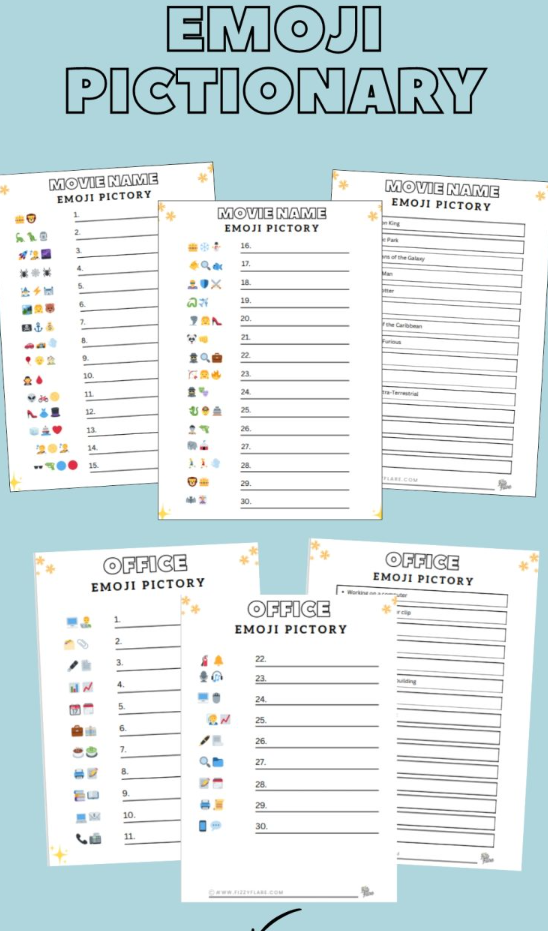
I prepare a list of phrases, movies, everyday activities, or workplace terms and represent each one with a series of emojis. Teams have one minute to solve as many clues as possible.
I display the clues on a screen or printed sheet and record the correct answers. The team with the highest score wins.
My tip: I choose clues that most coworkers can recognize and prepare an answer key in advance. This avoids unnecessary pauses and keeps the game moving.
8. Convince the Sharks
I divide coworkers into small teams and give each team a fictional product or service to pitch. They have one minute to prepare a short presentation aimed at convincing a panel of judges.
When time ends, each team presents its idea. I ask the judges to score the pitch based on creativity, clarity, usefulness, and how well the idea is explained.
My tip: I choose lighthearted fictional products, such as a self-organizing desk drawer or a coffee mug that reminds people to take breaks. Friendly feedback makes the activity more enjoyable.
9. Sneak a Peek
I show one player a simple object, picture, or arrangement of items for a few seconds. The player then describes what they saw to a partner without naming the object directly.
The partner must draw the item or identify it from the description. I compare the answer or drawing with the original and award points for accuracy.
My tip: I start with simple pictures and gradually use more detailed ones. Players should describe shapes, colors, sizes, and positions rather than guessing the answer.
10. Desk Decoration Contest
I give participants one minute to decorate a small section of their desk using approved office supplies. I can choose a theme, such as favorite colors, seasonal decorations, or the most organized workspace.
When time ends, coworkers vote for the most creative result. I can also award separate prizes for originality, neatness, and the best use of the theme.
My tip: I set clear limits on materials and keep participation optional. Decorations should not interfere with computers, keyboards, or normal work activities.
10 Minute to Win It Games Without Supplies
1. One-Handed Shoe Tie
I ask each player to sit comfortably with a lace-up shoe in front of them. One hand must remain behind their back while they try to tie the shoelaces using the other hand.
The first player to complete a secure knot correctly wins. If nobody succeeds within one minute, I compare how far each person has progressed.
My tip: I ask everyone to use a similar type of shoe and start with the laces untied. A short practice round helps beginners understand the challenge.
2. Stare Down
I pair players and ask them to face each other. Once the timer starts, they must maintain eye contact without laughing, deliberately making faces, or closing their eyes.
The first person to blink or laugh loses. If both players last the full minute, I declare a tie or pair them with new opponents for another round.
My tip: I keep the atmosphere friendly and let anyone who feels uncomfortable with direct eye contact look at a point near their opponent’s eyes instead.
3. Name Them!
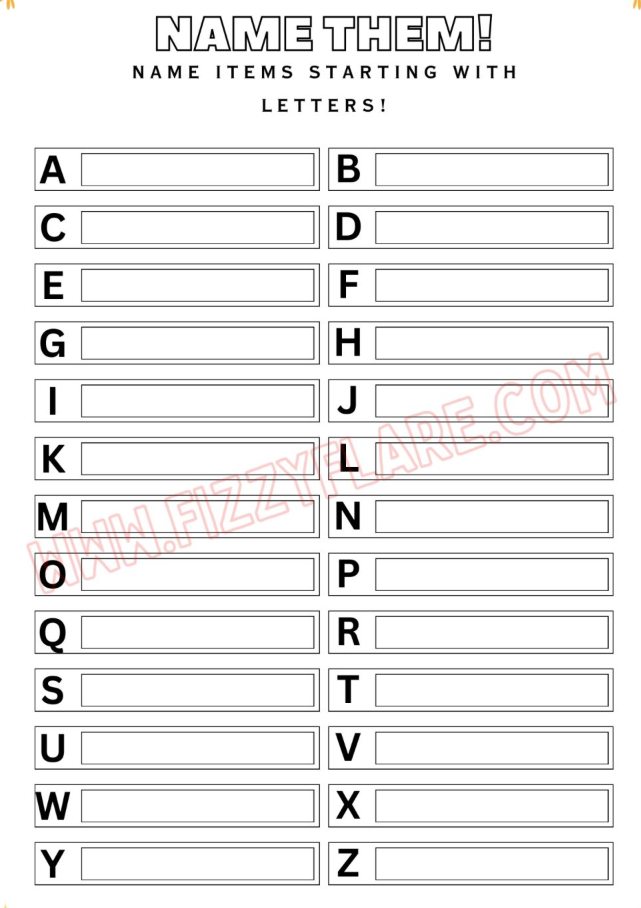
I announce a category, such as fruits, cities, animals, or things found in a kitchen. Each player has 60 seconds to name as many correct items as possible.
I keep a tally of unique answers and do not count repeated items. The player who names the most valid examples wins.
My tip: I choose categories with plenty of possible answers and explain whether players can repeat answers already given by others.
4. Backward ABCs
I ask everyone to recite the alphabet backward, starting with Z and ending with A. The challenge is to complete the sequence correctly before the one-minute timer ends.
I listen for skipped or misplaced letters. Players who make a mistake can restart or continue from their last correct letter, depending on the rules I choose.
My tip: I let younger participants practice first. For a harder version, I ask players to recite the letters without pausing for too long.
5. Gurgle Guess What?
I choose familiar songs that most players are likely to recognize. One participant makes a tune-like sound while the others try to guess the song before time runs out.
The team that identifies the most songs correctly within one minute wins. I can also let players hum a melody without speaking to keep the challenge simple.
My tip: I avoid asking players to gargle water while making a tune because this can cause choking. Humming or using nonsense syllables offers a safer way to play.
6. Pencil Flip
I give each player an unsharpened pencil and ask them to balance it on the back of one hand. They flip their hand and try to catch the pencil in their palm.
After a successful catch, players can add another pencil and repeat the challenge. The winner is the person who catches the most pencils at once within one minute.
My tip: I use lightweight pencils and ask players to practice with one before adding more. A clear tabletop makes it easier to retrieve dropped pencils.
7. How Many Words?
I choose a word with several letters, such as “springtime,” and ask players to create as many smaller words as possible from its letters. For example, they might form “ring,” “time,” or “sing.”
Everyone has one minute to come up with valid words. I check the answers at the end and award the win to the player with the highest number of accepted words.
My tip: I use the same starting word for everyone and set a rule about whether letters can be reused. This prevents confusion during scoring.
8. Shoe Shuffle
I ask participants to remove their shoes and place them in a mixed pile in the center of the room. When the timer starts, everyone must find their own shoes and put them on correctly.
The first player to locate and wear both shoes wins. I make sure players identify their own footwear rather than grabbing someone else’s pair.
My tip: I use a clear, non-slip area and ask everyone to walk rather than push through the pile. This helps prevent trips and collisions.
9. Memory Game
I display a group of objects for around 10–15 seconds, giving everyone time to observe them. I then cover the objects and ask players to recall as many as possible within one minute.
Participants can write down their answers or take turns naming objects aloud. The player who remembers the most correct items wins.
My tip: Although this game needs objects, I can use items already in the room. For a no-equipment variation, I ask a volunteer to name a sequence of words that everyone else must remember.
10. Gesture Guess
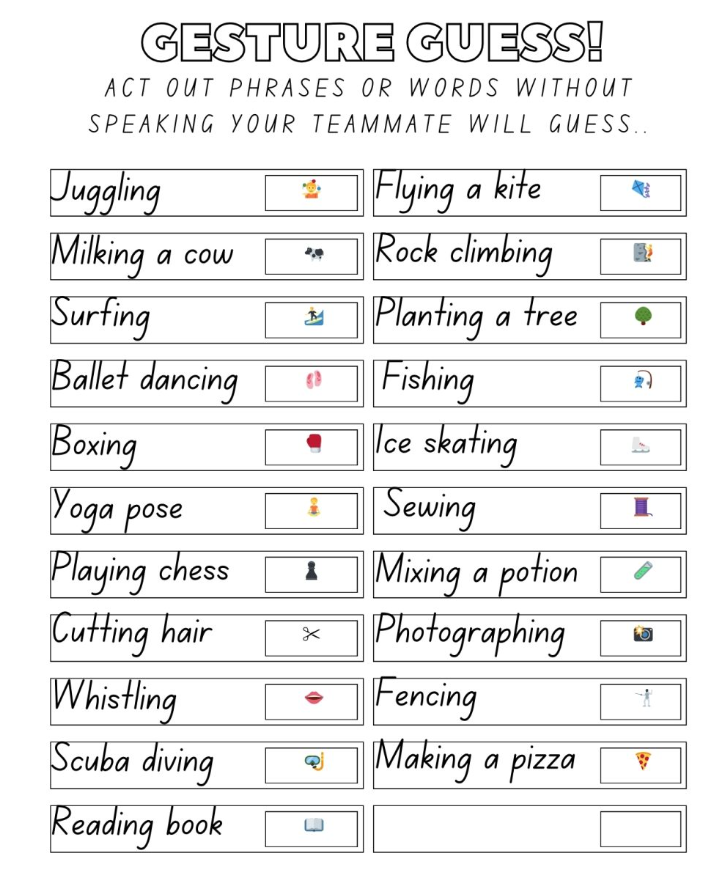
I choose familiar words, actions, or phrases for players to act out without speaking. Teammates watch the gestures and try to guess the answer before the one-minute timer ends.
Each correct guess earns a point. I can rotate the actor after every round so that everyone has a chance to participate.
My tip: I use simple prompts at first, such as brushing teeth, riding a bicycle, or walking a dog. As players get comfortable, I introduce more challenging actions and phrases.